
Vapors Choice UAE
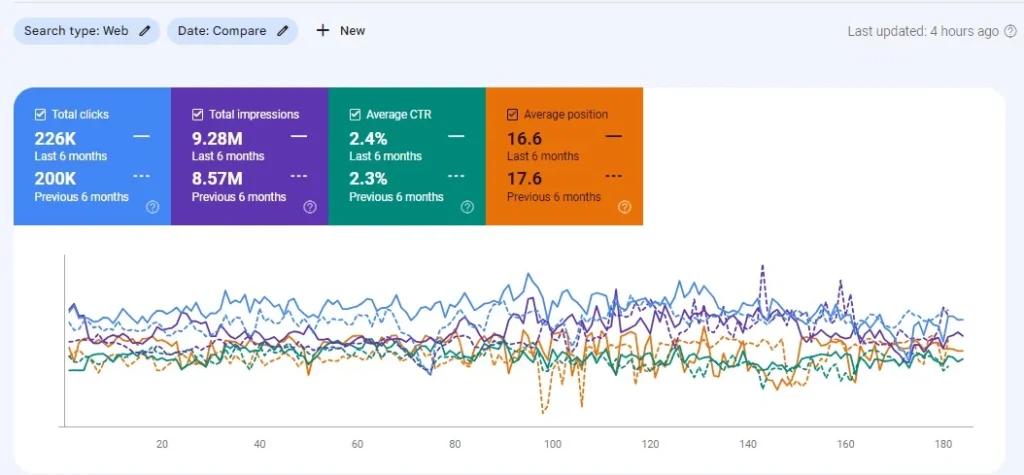
E-commerce SEO for an established store: 226K clicks in six months, up 13% on the six months before.
Read the case study →E-commerce SEO · Shopify · WooCommerce
Online stores have SEO problems other websites don’t: thousands of filter URLs, near-identical products, out-of-stock pages and slow mobile templates. E-commerce SEO fixes those, then gets your category and product pages ranking for the searches people make when they’re ready to buy.
Why stores need their own SEO
A normal SEO checklist misses most of what holds a store back. These are the issues I look at first.
Category pages target the biggest searches, yet most are a product grid with no text, no FAQs and a generic title.
Manufacturer descriptions copied across dozens of stores, so Google has no reason to rank yours.
Colour, size and price filters creating thousands of URLs that waste crawling and dilute rankings.
The same product reachable on several URLs, or variants split into separate pages competing with each other.
Ranking pages deleted or redirected to the homepage when stock runs out, throwing away their traffic.
Heavy themes and apps that make category and product pages slow on the phones most shoppers use.
Category pages & keywords
Category pages usually have the most to gain: they match broad buying searches like ‘cotton kurtas for women’ or ‘organic cattle feed’. I map every important search to one category, sub-category or product, so no two pages compete, then give each category a clear title, a short helpful intro, FAQs and links to related categories.
E-commerce SEO is part of my SEO services in Delhi, built around how your shoppers actually search.
Best for: stores with good products whose traffic still depends mostly on ads or marketplaces.
Is it right for you?
Ads can drive sales, but organic search brings buyers without paying for every click.
Revenue drops as soon as ad spend is paused.
Collection pages are thin and missing from Google for key searches.
Manufacturer descriptions copied across products and other sites.
Hundreds of near-identical URLs from filters, sorting and variants.
Heavy images and apps slow pages down on mobile.
Products don’t appear in Google Shopping or free listings.
Honest fit check
Saying this up front saves us both time.
With a handful of products, a strong website and local or paid channels may matter more.
Titles and descriptions are central to store SEO.
Pair SEO with Google Shopping ads while organic traffic builds.
Product pages & schema
Google’s product structured data lets shoppers see price, availability, review ratings, shipping and return details right in search results, and makes pages eligible for merchant listing experiences. Google shows these enhancements at its discretion, so the markup has to be complete, accurate and match what’s on the page.
Alongside the schema, I rewrite product descriptions that are copied from suppliers, add the details shoppers ask about, and keep the right product image and variant at one clear URL.
Productschema with price, stock, ratings, shipping and returns, validated
Platforms
The principles are the same everywhere, but every platform has its own quirks. These are the ones I fix most often.
Collections and products reachable on several URL paths, apps that slow pages down, thin collection pages and fixed URL structures that need careful internal linking.
Category, tag and attribute archives that duplicate each other, plugin bloat, pagination and hosting that struggles as the catalogue grows.
JavaScript rendering, missing server-side content, faceted URLs and schema that needs to be built in, worked through with your developers.
Store result
Vapors Choice UAE is an online store in Dubai. At this scale, small gains in ranking and click-through rate add thousands of visitors a month, and the last six months grew again on the six before.
Method
Most store traffic comes through category pages, so I start there: which collections should rank for which searches, and what each page needs to deserve it. Then product pages, product data and schema, and finally the crawl rules that stop filter and variant URLs competing with your main pages.
On Shopify and WooCommerce my team makes the changes directly; on custom platforms I brief your developer and verify the result.
Tools: Google Search Console, Google Analytics 4, Screaming Frog, PageSpeed Insights and a keyword research tool, Google Merchant Center and Shopify or WooCommerce analytics.
How it works
Technical clean-up first, then the pages that can bring the most revenue.
Crawl, Search Console, GA4 revenue data and competitors, ranked by revenue opportunity.
Filters, duplicates, canonicals, out-of-stock handling and speed fixed.
Every important search mapped to one category or product, including new landing pages.
Category content, product schema and rewritten descriptions for best sellers.
Digital PR and links to key categories, with a monthly report on organic revenue.
Your first month
A sample first month for a store with up to a few hundred products.
Crawl, indexing, duplicate URLs, speed and Merchant Center issues, ranked by impact.
Which collections target which searches, and what each one needs.
Top category pages improved and crawl issues fixed.
Organic clicks, revenue by landing page where tracked, and next month's plan.
What decides the result
Stores rank on the strength of their category pages, product data and technical health.
Unique introductions, filters and internal links on the pages that target the biggest searches.
Original descriptions, specifications, FAQs and reviews.
Price, availability and review data that can show in search results.
Canonical tags and rules that keep filter and variant URLs from diluting rankings.
A clean product feed for Google Shopping and free listings.
Pricing
Small stores fit the standard plans; larger catalogues are priced on products, categories, platform and competition after a free consultation. You get a written plan and a fixed monthly fee before anything starts.
For small stores: up to 25 keywords and 15 key category or product pages, technical fixes, 2 articles and links.
For growing stores: up to 50 keywords, 4 articles a month, digital PR and fortnightly reporting.
Hundreds of categories, several countries or a custom platform. Priced after a free consultation.
Working together
The practical details, so there are no surprises. Anything specific to your project is written into your quote.
Client reviews
From my SEO and development Google Business Profile, rated 4.9★ across 25 reviews.
“Aniket Gupta A Person I met when my business was suffering a lot (In the Pandemic days) and Now when my business is at boom. I rank on every keyword related to Watersports. All Thanks to Aniket Whose surely The Best SEO Expert in Delhi NCR. Strongly Recommend!”
“Aniket Gupta is Truly an amazing seo expert in delhi. His process of increasing the organic traffic is very smart and accurate. Highly recommend you to get your SEO done by Aniket.”
“I've had the pleasure of working with Aniket Gupta for SEO, and I couldn't be happier with the results. He's responsive, knowledgeable, and genuinely cares about his clients' success.”
Case studies
Full write-ups with the starting point, the work, the results and what the data can't prove.
E-commerce SEO for an established store: 226K clicks in six months, up 13% on the six months before.
Read the case study →FAQ
Still have a question? Call +91 93545 74690, message me on WhatsApp or email contact@aniketgupta.in.
Stores have category and product pages, filters, variants and stock changes that create duplicate and low-value URLs. E-commerce SEO deals with those, and focuses on category pages and product schema that win buying searches.
Not if they’re coming back. Keep the page live, mark it out of stock in the schema and suggest alternatives. If a product is gone for good, redirect it to the closest product or category, not the homepage.
Yes. Shopify handles basics like sitemaps, but stores still need fixes for duplicate product paths, collection page content, app bloat and schema. The same is true of WooCommerce archives and attributes.
For your best sellers and main categories, yes. Supplier descriptions are copied across many stores, so unique descriptions give Google and shoppers a reason to choose your page. Start with the products that sell most.
No. Google shows rich results at its discretion. Complete, accurate schema that matches the page makes your products eligible, and it’s validated in Search Console.
They work together. Ads and marketplaces bring sales quickly but cost money on every order; SEO takes a few months but brings orders at no cost per click. Most stores do best with both.
Technical fixes and better category pages often show gains within two to three months. Bigger growth from content and links usually builds over six to twelve months.
I set the strategy and lead the technical and on-page work. Specialist writers on my team handle content, a developer helps with bigger technical fixes, and every monthly report comes from me.
Sources
Checked in November 2026.
Free consultation
Send me your store's URL and platform. I'll show you the filter, duplicate and category issues holding it back, and the pages most likely to bring more orders. Or WhatsApp +91 93545 74690.
Free consultation
Share your website and, on a free consultation, I'll walk you through the issues that matter most and what fixing them would cost.
4.9 from 25 Google reviews (SEO & development)